Athletic development for children & teens (ages 10–18)
Athletic development in childhood and adolescence isn’t a short-term project; it’s a process. Between growth spurts, school, and club training, the body, resilience, and coordination are constantly changing. This is exactly where Athlete Development comes in.
The goal is to guide young athletes step by step and provide them with the foundations that keep them high-performing and healthy in the long term – in team sports as well as combat sports.
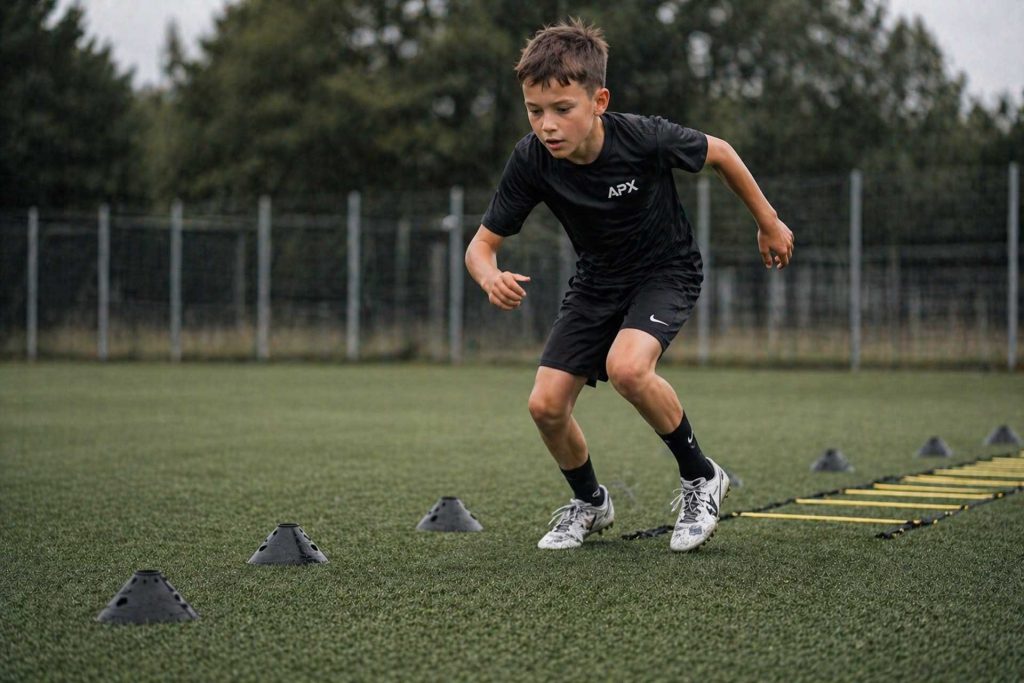
Why Athlete Development makes sense.
Many children and teens train early and intensively. Technique, tactics, and competition are the main focus. What often gets neglected are fundamental movement quality, mobility, stability, and load tolerance.
If these foundations are missing, the result can be overtraining, stagnation, or injuries. Athlete Development creates a balance here. It complements sport-specific training and focuses on the skills that often lack space in regular daily training.
Development over intensity.
Performance needs a solid foundation. Before intensity or additional load come into play, movement, coordination, and body control must be right.
Training isn’t based on rigid age groups, but on individual development. Growth spurts, club training volume, and personal requirements are consciously taken into account. This creates an environment where development is possible without overtaxing the body.
Sports-related content.
Depending on age and maturity, different priorities are in focus. Younger athletes learn to move safely and efficiently, improve their coordination, and build a stable foundation. As they get older, stability, basic strength, and initial performance-oriented content are specifically added.
- Clean movement patterns & body control
- Joint mobility and stability
- Coordination, rhythm, and timing
- Jumping, landing, and sprinting basics
- Basic strength with clean technique
- Age-appropriate load management
Collaboration Process
Assessment
Training
Monitoring / Re-test
Collaboration with Parents and Club
Coordination is crucial, especially during adolescence. Athlete Development is intended as a supplement to existing training – not as competition. Training volumes, game load, and recovery are all taken into account.
Parents receive transparent feedback and a realistic assessment of their child’s development. Trust and openness are central components of our collaboration.
What Athlete Development is intentionally not
Athlete Development is not a fitness program, not a bootcamp, and not training based on the principle of “more is better.” It’s not about short-term performance leaps or maximum exhaustion, but about a stable basis for athletic development.
- Not a fitness program
- Not a bootcamp
- No “more is better”
- No maximum tests
The next step
The best way to find out if Athlete Development makes sense right now is to talk in person. In a free initial consultation or as part of an athletic check, we’ll discuss the current status, training load, and possible next steps.