Information for parents
Development requires trust, time, and responsibility
Many parents today face a demanding task. They want to support their child’s sporting development without overtaxing them. At the same time, training volumes, performance pressure, and expectations within clubs are rising. School, growth, and recovery also play a role. Questions naturally arise in this area—and they are justified.
This page is intended to provide guidance. Calmly, honestly, and without unrealistic promises.
Performance isn't created by pressure
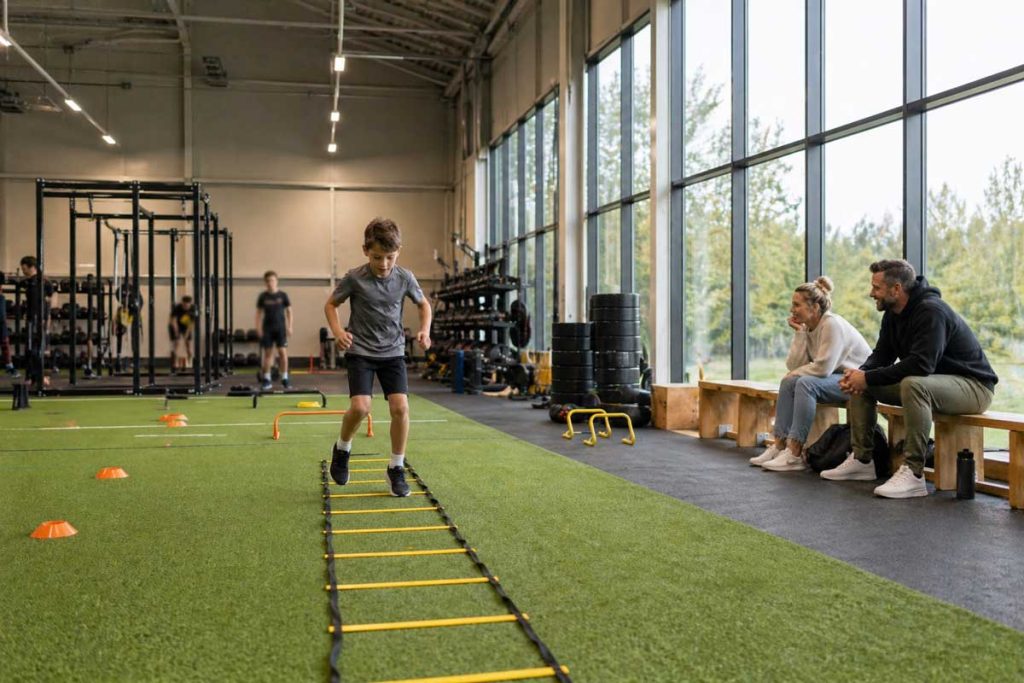
Athletic development in childhood and adolescence doesn’t follow a simple performance principle. “More” doesn’t automatically mean “better.” Especially during growth spurts, the body reacts sensitively to physical stress. Athletic training should support development—not create additional pressure. The goal is to make young athletes more stable, coordinated, and resilient without pushing them to their limits. Performance is a result, not a requirement.
What athletic training can do—and what it can't
Properly structured athletic training complements sport-specific training. It creates space for fundamental skills that are often neglected in team or combat sports training: clean movement patterns, mobility, stability, strength development, and load tolerance.
What athletic training cannot provide are guarantees for selections or a professional sports career. However, it offers a solid foundation on which sporting development can unfold.
Handling growth and physical load
Children and adolescents do not develop linearly. Phases of rapid progress alternate with phases where fatigue, coordination problems, or fluctuations in performance occur. These changes are normal. Therefore, physical load is consciously managed and adapted to the individual stage of development. Breaks are part of the process. Training should support, not add extra burden.
The role of parents
Parents play an important role in the development process. Open communication is therefore central. I make it a point to explain transparently why certain content is trained—or deliberately not. Patience, realistic expectations, and trust have a stronger long-term impact than pressure or comparisons with others.
Collaboration with the club
Athletic training is seen as a supplement to the existing daily training routine. Training volumes, game loads, and season phases are taken into account. When appropriate, coordination with coaches takes place to avoid double burdens.
The goal is to provide qualitative support for the existing sport—not to build up additional hours.
A clear stance
For me, athletic training is not a stage for self-promotion, but responsible work with young people. Not every child has to become a competitive athlete. What matters is that they can develop in a healthy, versatile, and confident way through sport.
The next step
If you are unsure whether athletic training is currently right for your child, a personal conversation is the right first step.
Together, we will clarify calmly and honestly whether athletic training provides support at the moment—or whether restraint makes more sense.